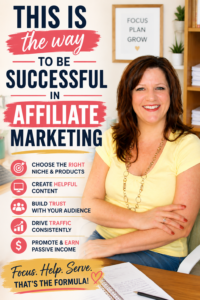
 There are countless opinions about how to succeed in affiliate marketing, which can make it difficult to know what actually works. After more than 10 years as a full-time affiliate marketer, I’ve learned that lasting success isn’t about chasing shortcuts or every new trend—it’s about following a few proven principles consistently.
In this post, I’ll share the approach that has helped me build a successful affiliate marketing business and can help you do the same.

This post contains affiliate links. I may earn a commission if you use my recommended resources, at no extra cost to you
What is the Best Way to Succeed in Affiliate Marketing?
Succeeding in affiliate marketing comes down to a handful of key steps that all support each other. There is no magic trick—success is about building solid foundations.
My experience shows that getting smart, current training has been the smartest investment. Learning specific, practical techniques helps you skip common mistakes and make real gains much faster.
Affiliate Marketing Success Can Be Achieved with These 5 Steps
1. Pick a niche topic you’re genuinely interested in—something you’ll be happy to write about for months or years.
2. Build your own website so you have true ownership. Then, focus on creating quality content that draws the right readers and search engines.
3. Create high quality, valuable content based on questions people are actually asking regarding your niche.
4. Share your content on popular platforms like Pinterest to get traffic.
5. Offer a valuable email opt-in and set up an automated email funnel to create lasting relationships and steady income from your website traffic.
Every element strengthens and automates the whole system. Let’s break down these steps and walk through how they fit together into the straightforward system I use daily.
First, Get Effective, Up-to-Date Affiliate Marketing Training
Affiliate marketing never stands still. What worked two years ago could be outdated now. That’s why it’s crucial to focus on training that comes from people actually making a living with affiliate marketing right now. They offer practical, step-by-step guidance: picking a profitable niche, researching keywords, building a site, growing your social reach, and building a responsive email list.
Early on, I wasted weeks chasing old or shallow tips that didn’t help. When I finally found smart, all-in-one training, things started to click. The right education cuts through the clutter and gives you the confidence and tools to get results efficiently. You shouldn’t have to guess your way forward.
I learned from a company called, Wealthy Affiliate. You can read my full review of Wealthy Affiliate here.
Choose a Topic You’re Interested In
Choosing a niche you care about is huge. If you pick something simply because it seems trending, but you don’t like the topic, motivation runs dry quickly. When you’re genuinely curious about or already enjoy your niche, creating content comes much easier. Your energy shines through, readers pick up on it, and trust grows.
Interest gives you stamina, even when progress slows. It doesn’t have to be your lifelong passion—just something you look forward to learning and talking about. It almost always leads to more helpful, unique content, and more long-term followers.
For help choosing a topic, take advantage of these trainings:
Mastering the Art of Niche Selection
Niche Research from Start to Advanced
Create an Affiliate Marketing Website
Having your own website is important. Don’t start with a cheap website creation/hosting company. At least not if you’re serious about being a successful affiliate marketer long term. I highly recommend creating a WordPress website, and getting good, quality hosting.
When you own your website, your site is durable and fully under your control. I use WordPress since it’s flexible, affordable, and simple to update or expand. These days, WordPress makes starting a site incredibly easy—even for complete beginners.
Your website becomes your basecamp. Every post, product review, or how-to post you share builds authority in your niche. You can link to affiliate merchants, create detailed guides, offer product comparisons, and answer reader questions—all from one place. Most importantly, your website is the foundation for long-term, reliable income.
For a complete training series on how to set up an affiliate marketing website, check out Setting Up a New WordPress Website.
Also check out my To-Do List for Launching Affiliate Websites.
Write Valuable Content for Your Website
Content is the magnet that attracts and keeps readers. At first, focus on answering real questions people have in your niche. Write product reviews and helpful guides. The more useful, clear, and original your content is, the better your site will perform on search engines and social media.
I always begin with keyword research: what are people searching for in my niche? I create article outlines based on problems people need solved. Each post gives honest recommendations and highlights the real value of products.
Building genuine trust matters—a lot. People remember honesty and come back because they know you’re real.
I have several posts that’ll help you learn how to create high-quality content by taking advantage of this training on content creation
Post Your Content on Pinterest for Free Traffic
Pinterest is a visual search engine that drives free, targeted traffic, especially for niches like home, wellness, finances, style, tech, crafts, and food. Sharing your blog content with original, eye-catching Pins can send high-quality visitors to your website, sometimes before Google rankings pick up steam. I rely on Canva to design engaging pins, then post them to boards related to my niche with keyword-rich descriptions.
My approach is to create three or four fresh pins for every new post, scheduling them on Pinterest two days apart. Pinterest traffic continues to grow over time, providing a valuable stream of readers for months.
I took a course several years ago from a woman named Carly who has one of the most popular, most effective Pinterest courses. It’s called Pinteresting Strategies. Check it out!
Also check out a training I did recently regarding what I call, Paragraph Pins.
Create an Email Opt-In
Your email list is your direct connection to readers—and it’s a must-have in affiliate marketing. By offering something helpful, like a free guide, checklist, or mini-course, you give visitors a good reason to subscribe. I use simple opt-in forms I create as I demonstrate in this video. Place your forms everywhere people visit—after blog posts, in the sidebar, even as pop-ups.
Your freebie should be closely tied to your topic and offer a real solution. Think “Quick Start Checklist” or “Mini Email Course.” The more relevant and useful your offer, the higher your sign-up rates.
A strong email list leads to more predictable, consistent affiliate sales over time. I personally use AWeber for email marketing. You can read my full review of AWeber here.
Create an Email Funnel
Once someone joins your list, an automated email funnel helps turn readers into raving fans—and eventually customers. My welcome sequence is short and approachable. The first email delivers the promised freebie and a little about my own story. Over the next few emails, I share helpful tips and my best resources. As trust grows, I recommend relevant affiliate products—always honestly, with a focus on helping, not just selling.
Email funnels save you time and allow new readers to always get the right message, even if you’re busy or traveling. This automation boosts income, strengthens relationships, and frees up your time for more content creation.
Check out my video showing exactly how I use AWeber for my affiliate marketing business.
Also, take advantage of this training, Email Marketing for Beginners.

The Only People Who Don’t Succeed at Affiliate Marketing are the People Who Quit!
With more than ten years invested as a full-time affiliate marketer, I’ve learned that making a solid, realistic plan—and sticking to it—is what really wins in the long run. Don’t try to sprint through every strategy at once, and try not to expect immediate results.
Consistency and patience matter far more than hustling non-stop. The best routine: aim to publish a new blog post every week, design three or four fresh Pinterest pins for every post, insert an opt-in opportunity in each post, and add those posts to your email funnel. Keeping up with this simple schedule builds the foundation for steady, reliable results.
Pin it for Later!